Sector, Healthcare & clinics
Healthcare and clinic website design.
For clinics, practices and healthcare providers where the website has to establish clinical credibility before it can ask for anything. Treatment-led structure, honest pricing, and a route into consultation that matches how the practice actually runs.
The problem
The problem with most clinic websites.
Healthcare is a sector where the marketing routinely outruns the medicine, and patients know it. Someone landing on a clinic website is making a fast, mostly unconscious judgement about whether the people behind it are clinically serious. That judgement happens on tone and structure long before anyone reads a treatment description, and urgency banners, discount framing and stock photography all push it the wrong way.
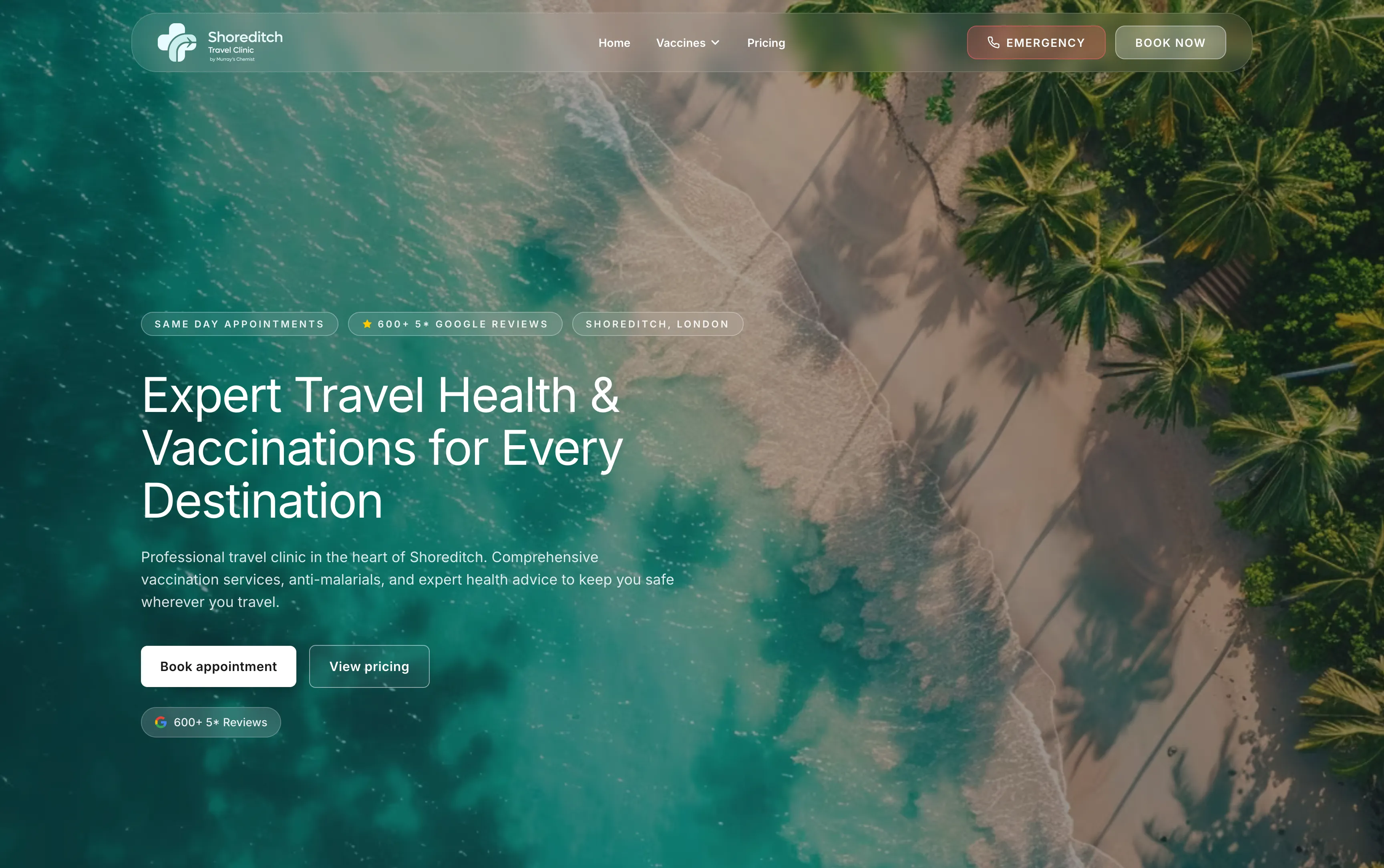
The second problem is structural. Patients do not search the way clinics organise themselves. Someone travelling to Thailand searches for the vaccinations they need for Thailand, not for 'travel health services'. A clinic site built around its own service list is invisible to that search and confusing to the patient who does find it.
The third is the gap between the website and the practice. Sites promise instant booking for treatments that require assessment, or hide pricing for treatments patients need to budget for. Both erode trust at exactly the point it matters.
How we build
How we build for this sector.
- 01
Clinician-led positioning
The named, qualified practitioner placed at the front of the site. In a low-trust category they are the strongest asset available, so the design leads with them rather than filing them on an about page.
- 02
Structured the way patients search
Destination, condition or treatment routes that match real search behaviour, rather than a structure that mirrors the clinic's internal service list.
- 03
Published pricing
Prices on the page where the practice is willing to publish them. Patients planning a treatment or a trip need to budget, and every question they have to phone in for is a booking that might not happen.
- 04
Booking that matches the practice
Direct booking where a slot can genuinely be honoured, consultation-first routing where treatment needs assessment. The site never promises something the clinic cannot deliver.
- 05
Restraint as a trust signal
Quiet typography and unhurried pacing read as clinical. Countdown timers and discount framing read as retail, which is the wrong signal in a medical context.
- 06
Results and evidence, handled carefully
Outcomes presented as evidence of the work rather than as advertising, within what the practice is comfortable and permitted to show.
- 07
Multi-site and multi-branch handling
Several locations presented as one practice with distinct, findable branches, so the search footprint stays consolidated instead of competing with itself.
- 08
Fast on mobile
Most of this traffic arrives on a phone, often urgently. Hand-coded and lightweight so the page is there before the patience runs out.

Who it's for
For practices whose credibility is the product.
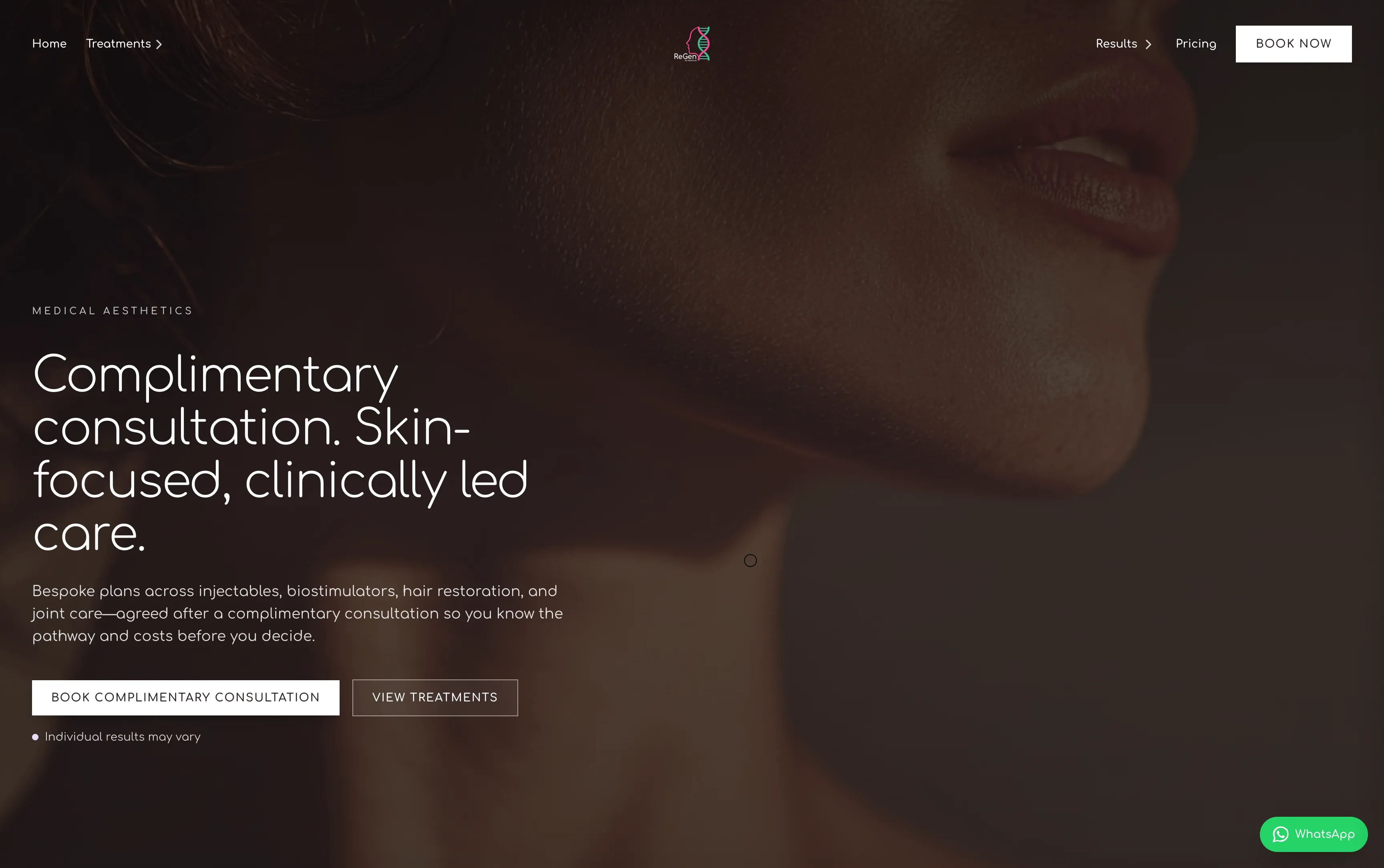
Usually a clinic, practice or healthcare provider competing against louder marketing and losing patients who cannot tell the difference from the outside. The clinical substance is real; the website is not carrying it.
- Private clinics
- Travel health and vaccination services
- Medical aesthetics practices
- Multi-branch practices
Usual engagements
How this work is scoped.
- Full websites Complete multi-page business websites, engineered on Astro for speed and search.
- Website redesigns Modernising a site with real history, reshaped, rewritten, and rebuilt on Astro.
- Landing pages A single hand-built landing page focused on one conversion goal.
- Performance audits A focused audit of an existing site with a prioritised list of fixes.
FAQs
Questions, answered.
- Do you understand healthcare advertising rules?
- We build to them rather than around them: no outcome guarantees, no before-and-after framing where it is not permitted, no claims the practice has not signed off. We are not your compliance advisor, and where something sits close to a line we will flag it and ask you or your regulator, not decide for you.
- Can patients book directly on the site?
- Where a slot can genuinely be honoured, yes, and we integrate with the booking system you already use. Where the treatment needs assessment first, the site routes to a consultation instead. Promising a booking the clinic then has to unpick is worse than not offering one.
- Should we publish our prices?
- In most cases yes, and it is usually the single change that produces better enquiries. Patients planning treatment need to budget, and publishing filters out the conversations that were never going to convert. Where pricing genuinely varies by assessment, we publish the range and say why.
- We have more than one branch. Separate sites or one?
- One site, with each branch given its own findable presence. Splitting into separate sites divides your search footprint and means both compete with each other. Keeping the authority together and distinguishing the locations works better.
- Can you work with our existing patient management system?
- Usually. We build against what you already run rather than asking you to change systems for the website's convenience. If an integration is not worth the cost, we will say so and suggest the simpler route.
- How long does a clinic website take?
- A focused landing page in a few days. A full treatment-led site in anything from a few days to three or four weeks. Clinical sign-off on the content is usually what sets the pace, and it is worth the time.
Other sectors
Work we also specialise in.
Start a project
Building in this sector?
Tell us what the site has to do and we'll shape the right engagement. You'll hear back from Jake directly.
Three questions · about a minute
See the work